Mobile Repair That Reaches Stranded Trucks Quickly
Emergency roadside truck repair in Johnston City for semi trucks broken down on highways, rural routes, or remote locations
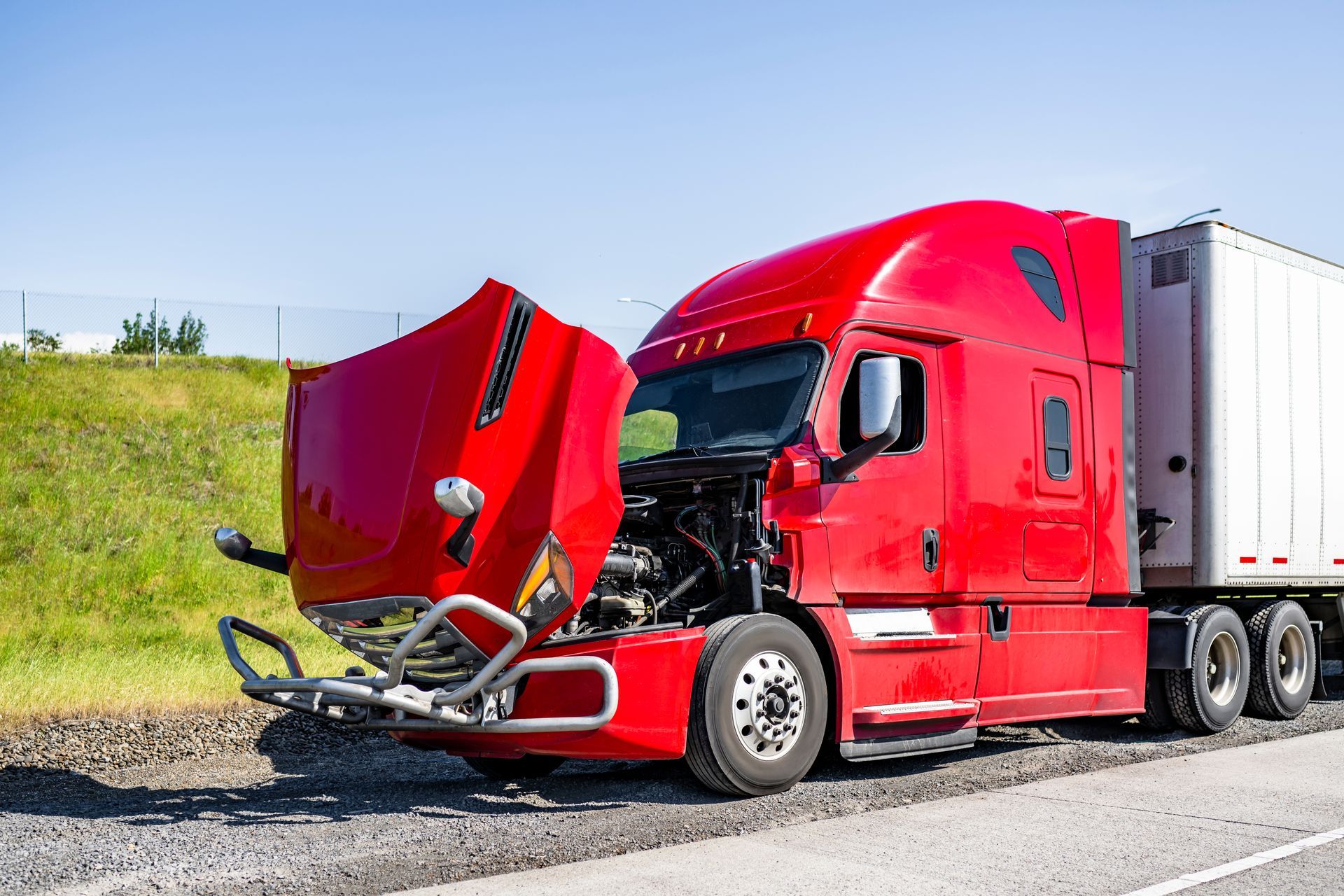
A loaded semi truck stopped on the shoulder of a rural highway represents compounding costs by the hour—the load sits, the driver waits, and the carrier pays for both. Don's Heavy Duty Truck Repair operates 24-hour mobile service throughout the week, dispatching to stranded semi trucks and trailers across Johnston City and throughout the region. The operation's core work is off-interstate traffic: drivers passing through southern Illinois who need immediate help and have few options for rapid roadside response when the breakdown happens miles from a fixed shop.
The mobile unit arrives equipped to handle the failures that most commonly stop trucks in the field—electrical faults, brake system issues, suspension failures, lighting violations that prevent continued operation, and mechanical problems that a remote driver can't address independently. Because Don's Heavy Duty Truck Repair also performs DOT inspections, suspension repair, and electrical diagnostics, a roadside call doesn't hit a capability ceiling when the problem turns out to be more complex than the initial report suggested. The crew that responds carries the equipment to diagnose first, then repair, rather than arriving with a presumed fix and discovering the actual fault mid-job.
Call (618) 579-4900 to dispatch mobile repair to your current location—describe what the truck is doing and the crew will confirm what equipment and parts to bring before arriving.
Why Roadside Repair Capability Depends on What the Truck Carries
Emergency roadside repair on heavy duty equipment is not the same work as shop repair performed at a location with a lift, controlled lighting, and parts delivery—it requires a technician who can adapt the repair sequence to whatever access the roadside position allows. Don's Heavy Duty Truck Repair has operated since 2007 with a crew on rotation, which means response happens at any hour rather than only during a business window. The Google review history from interstate customers reflects the pattern: drivers who experienced a breakdown and had no local shop relationship called based on availability and received a repair that cleared them to continue.
Once a roadside repair is completed, the driver should be able to perform a full pre-trip check against the repaired system before pulling back onto the road—brake system pressure holds, lighting circuits cycle correctly, and any mechanical repair allows normal operation under the load the truck is carrying. A repair that clears a fault code without addressing the underlying condition may get the truck moving but not cleared for the next roadside inspection, which is why the diagnostic step matters before parts are replaced.
Rural service areas in this region have limited options for rapid heavy duty response, and the 24-hour availability throughout the week means the service isn't limited to daylight hours or weekdays. Family-owned operations with consistent crews tend to respond faster than dispatch-based services because the call goes directly to the people who do the work rather than through a coordination layer.
Questions Before Calling for Emergency Roadside Service
These questions address how the roadside repair process works, what the crew brings, and what you can do before the truck is reached to help the repair go faster.
What information helps the repair crew prepare before arriving at a breakdown location?
The make, model, and year of the truck, a description of what the truck is doing or failing to do, and whether any warning lights or codes are showing all help the crew confirm what diagnostic equipment and likely parts to bring before they leave—this reduces the chance of a second trip for components.
How does the roadside repair process differ when the truck is carrying a loaded trailer?
Access to the truck's undercarriage and frame is more limited when the trailer can't be dropped, which affects how suspension, brake, and coupling device repairs are sequenced—the crew evaluates what can be safely accessed in position and what requires the trailer to be staged separately before work proceeds.
What brake system repairs can be completed roadside versus those requiring a shop?
Brake adjustment, slack adjuster replacement, air line repair, and brake chamber replacement are routinely completed at roadside; brake drum or rotor replacement on a loaded drive axle typically requires the trailer to be dropped and may be staged at a secure location depending on what the inspection finds.
How is a lighting fault on a trailer diagnosed quickly during a roadside stop?
The circuit is tested at the tractor connector first to confirm the tractor side is supplying signal, then at the trailer pigtail to identify whether the fault is in the connection or the trailer wiring—this two-point test identifies the fault side before the technician traces the full circuit, which shortens the diagnostic time at roadside.
What should the driver do to make the repair site safer before the crew arrives?
Move the truck as far off the travel lane as the breakdown allows, set all required reflective triangles at the intervals specified for that road type, and leave the four-way flashers running—having the vehicle positioned to give the technician working clearance on the problem side of the truck shortens the time needed to access the repair area.
Don's Heavy Duty Truck Repair also provides emergency roadside repair in Marion, Carbondale, Mount Vernon, Metropolis, and Murphysboro. Call (618) 579-4900 any hour of the day to dispatch mobile repair to your location.