Brake Failures That Can't Wait for a Shop Visit
Brake repair in Johnston City for semi trucks and trailers with air brake faults, worn components, or out-of-service conditions
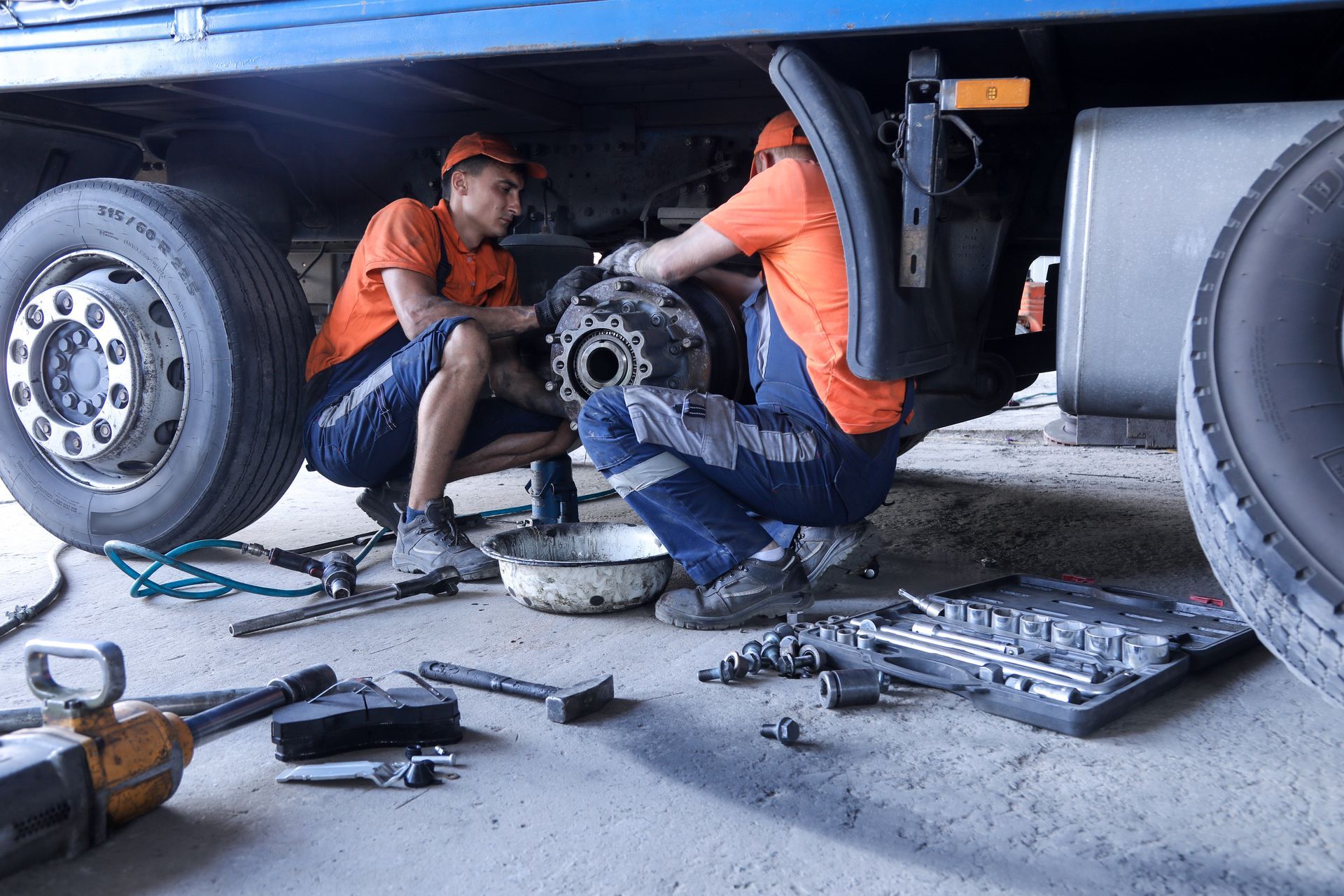
Worn or failed brakes on a semi truck aren't a deferred maintenance item—they're an out-of-service condition that stops a load and creates a compliance issue on any route. Don's Heavy Duty Truck Repair provides mobile brake repair and replacement for heavy duty trucks and trailers, dispatching directly to your location with stock pads, rotors, drums, and air brake components already on the vehicle. The crew has been performing brake work since 2007 and maintains 24-hour emergency availability for drivers who go down with a brake failure on route.
The mobile brake service begins with an air line inspection, pad and rotor condition assessment, and a check of the air brake system's compressor output, valve function, and line integrity before any components are replaced. That sequence matters because an air brake failure isn't always the worn pad that's visible—it can be a line leak or a valve fault that would send the truck back down the road with the same underlying problem. Don's crew works through the system rather than replacing the most obvious component and calling it complete.
Contact Don's Heavy Duty Truck Repair to have a technician assess your brake system and identify what needs replacement before the truck moves again.
What Brake Service Actually Covers on a Heavy Truck
Brake service on a heavy duty semi truck involves two distinct systems that both require assessment: the friction components—pads, rotors, and drums—and the air brake system that actuates them. Don's Heavy Duty Truck Repair carries stock pads and rotors on the dispatch vehicle so drum brake and disc brake replacements can be completed at the breakdown location without waiting on a parts order. For air brake systems, the inspection covers compressor output pressure, valve function across the primary and secondary circuits, and line integrity, because a single failed valve or a line leak at a fitting can compromise the entire system's performance.
After brake repairs are completed, the driver can confirm that stopping distance and pedal response match normal operating parameters, and the air system holds pressure through a static test before the truck returns to the road. Fleets running through the Murphysboro and Marion corridors have used Don's for brake work both as emergency calls and as scheduled pad and rotor replacement that keeps trucks compliant on DOT inspections—two different use cases for the same mobile service.
Emergency brake failures receive 24-hour dispatch, which is the relevant consideration for a driver who finds a brake fault late at night between delivery stops. Scheduled brake service for fleets on preventive maintenance plans is coordinated around route timing so trucks aren't pulled during peak load windows.
Questions About How Brake Service Gets Done
Brake repair on a heavy truck involves more steps than a standard pad swap, and the air brake system adds complexity that drivers and fleet managers often ask about before a service call.
How does the air brake inspection sequence work during a mobile service call?
The technician checks compressor output to confirm the system is building pressure correctly, tests valve function in both the primary and secondary circuits, inspects lines and fittings for leaks, and verifies that the slack adjusters are within the correct range before evaluating the friction components.
What determines whether drums or disc brakes are used on a given axle position?
Steer axles on many heavy trucks use disc brakes for improved stopping response, while drive and trailer axles often run drum brakes—Don's carries components for both configurations so the repair isn't limited by which system is on the truck that came in.
How can a driver identify a brake problem developing before it becomes a hard failure?
Warning signs include increased stopping distance, a pulling sensation to one side under braking, audible grinding or squealing from a wheel end, or an air pressure gauge that doesn't hold steady during a stationary test—any of these warrant a brake inspection before the next loaded run.
Why does an air line inspection matter even when the visible brake components look acceptable?
A line leak or faulty relay valve can cause slow brake apply and release, which accelerates pad and drum wear even when the friction components themselves are within spec—the air system failure gets missed if the technician only looks at what's worn rather than why it's wearing.
What does the crew verify before clearing a truck for road use after a brake repair?
The technician runs a static pressure hold test on the air system, confirms that all replaced friction components are seated and adjusted correctly, and verifies that the brake response is consistent across axle positions before the driver is cleared to move the truck.
Don's Heavy Duty Truck Repair also provides brake repair and replacement in Marion, Carbondale, Mount Vernon, Metropolis, and Murphysboro. Call (618) 579-4900 to dispatch a mobile brake technician to your location or to set up scheduled brake service for your fleet.